
Product Overview Based on the sensitivity of optical fi …
Continue reading “Integrated Optical Fiber Vibration and Temperature Monitoring Device”
Product Overview
Based on the sensitivity of optical fibers to vibration and temperature, the optical fiber vibration and temperature monitoring device integrates acoustic wave vibration and distributed temperature measurement functions. Through intelligent analysis of vibration signals and combined with a self-developed artificial intelligence engine, it realizes early fault diagnosis of belt conveyor idler bearing damage, fracture, belt friction, deviation, and motor reducer abnormalities.
It is especially suitable for belt conveyor idler fault diagnosis and advanced fire early warning. Through the fusion judgment of acoustic and temperature multi-parameters, it effectively solves the problem of delayed response of traditional single temperature measurement, improving equipment safety and fire prevention capabilities.
Product Features
(1) A single optical cable collects both vibration (sound) and temperature signals, realizing multi-dimensional data fusion perception.
(2) The maximum monitoring distance of a single channel is 70km, which is widely suitable for large-scale downhole layout.
(3) Supports multi-channel parallel synchronous measurement, with no monitoring time blind spots, ensuring data continuity.
(4) Identifies abnormalities of equipment such as idlers through vibration feature analysis, realizing advanced early warning of fire hazards.
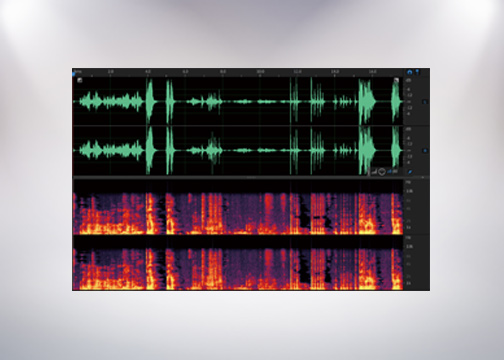
(5) Equipped with sound restoration and accurate disturbance point positioning functions, supporting emergency rescue and fault traceability.
(6) Adopts an optical fiber passive sensing method, suitable for complex industrial environments such as strong electromagnetic fields and flammable and explosive areas.
(7) Built-in algorithm model performs cross-validation on acoustic and temperature data, significantly improving alarm accuracy.
(8) Supports seamless connection with existing monitoring platforms, providing standard data interfaces and linkage control functions.
Application Cases