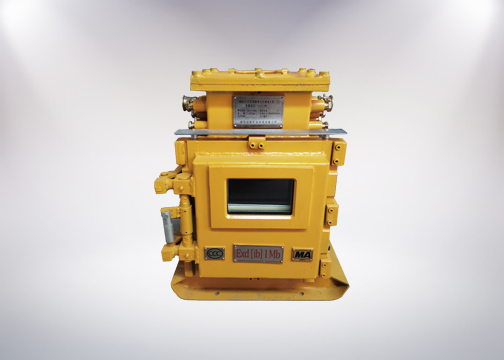
The distributed fiber optic temperature sensing device is a system that monitors temperature distribution and locates heat sources based on the Raman scattering principle and OTDR (Optical Time-Domain Reflectometry) technology. It is mainly applied to fire monitoring in fire-prone areas such as substations, cable tray trenches, conveyor belts, and coal mining working faces. By monitoring and analyzing the trend of ambient temperature and locating high-temperature abnormal points, it realizes the division of fire-risk areas. Combined with industrial Ethernet, it enables real-time data upload and big data statistical analysis.

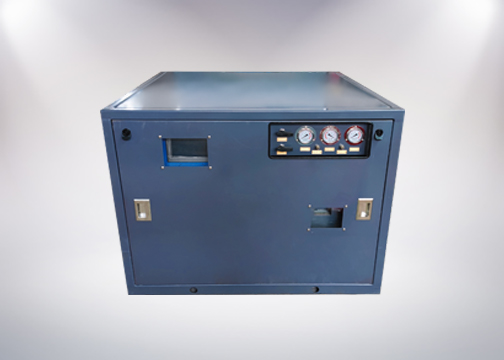
The ZQC6/6 underground bundle tube gas sampling device features two sampling control modes: automatic and manual. It is a high-efficiency control system capable of multi-area cyclic sampling, concentration detection of seven types of gases, as well as real-time data transmission and storage. By being deployed in close proximity to monitoring locations such as working faces, it can effectively shorten the gas transmission distance, preventing gas leakage and contamination that may lead to inaccurate data. Meanwhile, the adoption of on-site analysis and real-time data upload strategies enhances the timeliness of gas detection values. Cooperating with the ground system software, it conducts statistics and analysis on the collected concentration data of fire-indicating gases in underground coal mines, enabling intelligent judgment and early warning of the development degree of coal spontaneous combustion. This allows for early monitoring and prediction of fire conditions, providing a scientific basis for the prediction, prevention and control of various spontaneous combustion fires in underground coal mines.

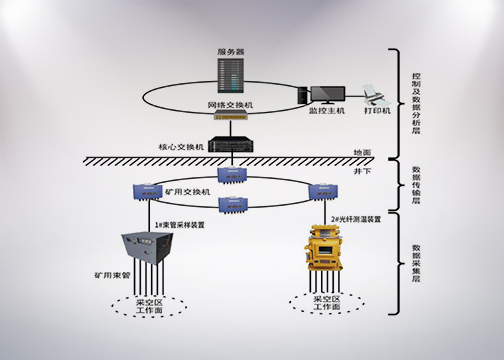
The Online Monitoring and Intelligent Early Warning System for Coal Spontaneous Combustion is mainly composed of three parts: the data acquisition layer, the data transmission layer, and the control & data analysis layer. It realizes the functions of automatic underground gas sampling, analysis, and early warning. The ground host computer can display the working status of underground equipment in real time, remotely control the working mode of underground equipment, and conduct sampling and analysis of gas at designated locations. It features a high level of informatization and intelligence, and is flexible and convenient to use.