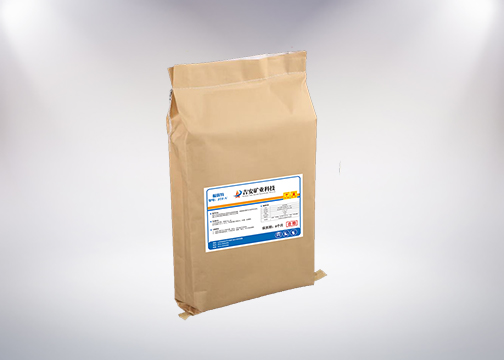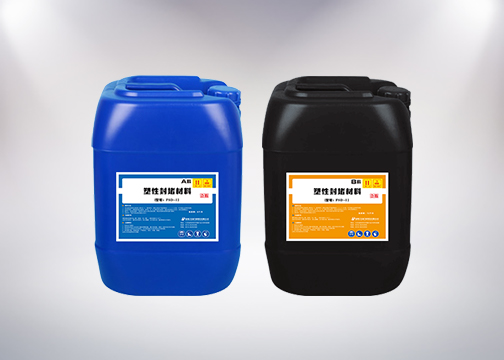
Under the action of mine pressure, underground coal pillars, roadway surrounding rocks and closed wall surrounding rocks are prone to fragmentation, forming certain air leakage channels. This not only causes the oxidation and spontaneous combustion of residual coal areas or surrounding rock coal bodies, but also creates channels for the diffusion and overflow of harmful gases such as gas. To address the problems existing in conventional materials—including the easy loss and low utilization rate of low-viscosity fluid sealing materials, the fast setting speed and low permeability of consolidated filling materials, the high heat generation, high temperature and potential risk of secondary disasters of organic reinforcement materials, and the formation of new air leakage fractures due to secondary crushing of reinforcement and consolidation bodies under pressure—our company has innovatively proposed the plastic sealing technology.

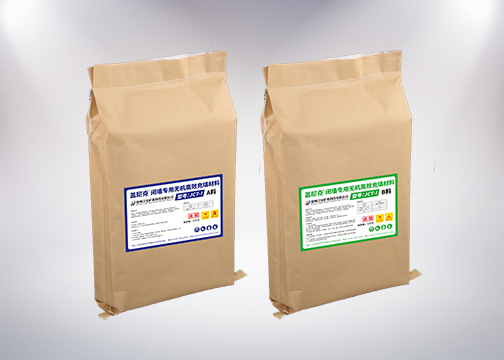
Gainike Inorganic High-Efficiency Filling Material for Closed Wall (JCT-Ⅰ) is a specially developed inorganic filling material for efficient filling and blocking of permanent closed walls. The material consists of two powder components, Material A and Material B. According to on-site requirements, it is mixed with water in a certain proportion to make a premix, which is then fully mixed by a slurry mixing device to form an inorganic solid material. After the mixed slurry is poured into the cavity of the permanent closed wall, on the one hand, it has a good function of penetrating and blocking broken holes and cracks in the surrounding rock; on the other hand, it can achieve a complete roof-contacting effect.

Gainike Inorganic Self-Foaming Filling Material (JWT-Ⅲ) is an inorganic material with antistatic properties. It adopts innovative foaming technology, enabling room-temperature chemical self-foaming and room-temperature curing of inorganic materials. Compared with organic polymer materials, this material features low usage cost, no heat release, and high safety, meeting the requirements of light weight, sealing, load-bearing, high efficiency, and environmental friendliness. It is particularly suitable for filling and plugging broken areas, cavities, and air leakage channels in coal seam environments such as underground upper/lower corners, goafs, roof fall areas, etc.

Gainike inorganic foam filling material is an inorganic fire prevention and extinguishing material used for filling and plugging air leakage. It is mainly applied to corner plugging and open cavity filling. This material is a single-component inorganic mixture with a simple Application Process. When in use, it is mixed with water in a certain proportion to form a slurry, which is pumped out by a grouting pump. Then, compressed air is introduced into the foamer to form foam. The material has no reaction exotherm, neither burns nor supports combustion. Compared with organic polymer materials, this material is low in price, inherently safe, and meets the requirements of safety, light weight, sealing and environmental protection.

Gainike inorganic self-foaming filling material is used by mixing material A (powder), material B (liquid) and water in a certain proportion. It is a completely inorganic material with absolute flame retardancy and antistatic properties, neither burning nor supporting combustion. It adopts innovative foaming technology to realize normal-temperature chemical self-foaming and normal-temperature curing of inorganic materials. Compared with organic polymer materials, this material has the advantages of low price, no heat release and good safety, meeting the requirements of light weight, sealing, high efficiency and environmental protection. It is especially suitable for filling and plugging broken areas in contact with coal such as upper and lower corners, goafs, roof caving areas, as well as hollow areas and air leakage channels.

Technology is developed for the prevention and control of coal spontaneous combustion in areas such as goafs of steeply inclined working faces, goafs of upward/downward mining working faces, and fractured zones of roadway surrounding rocks, as well as for the sealing of air leakage channels like working face corners, support roofs, and shallow goafs behind supports.