Slider Image
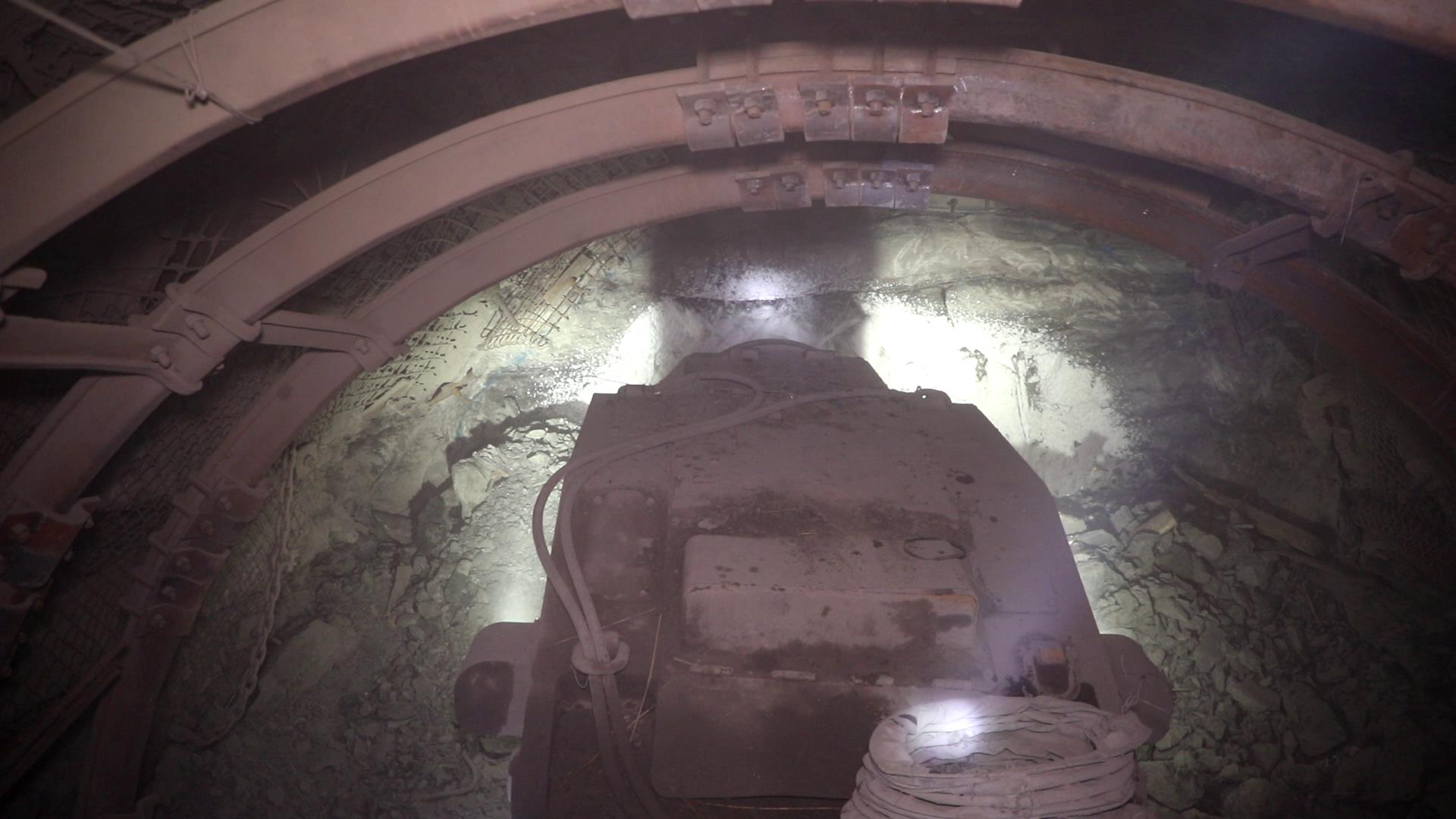
Committed to Safe, Smart, and Green Mining

Focused on Mine Safety, Intelligent and Green Mining

From disaster warning to control, we protect your mining operations with advanced technology.

Slider Image
Committed to Safe, Smart, and Green Mining

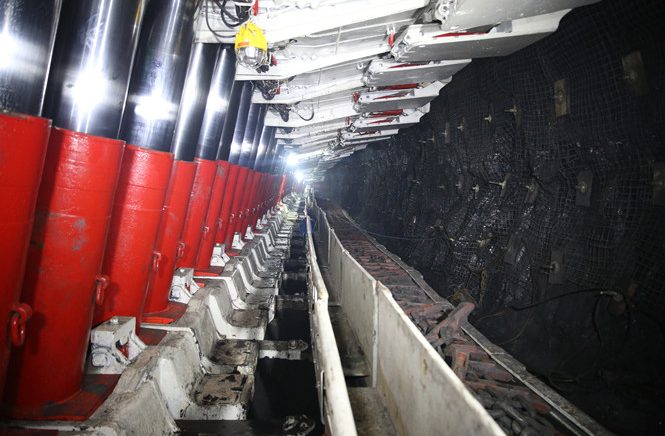
Intelligent Ventilation System Demand-Based Ventilation Dynamic Regulation

From "Production Determined by Ventilation" to "Ventilation on Demand", achieving safe, efficient, and energy saving operation of the mine ventilation system.

Slider Image
Committed to Safe, Smart, and Green Mining

Full-Scenario Comprehensive Dust Control Safeguarding Miners' Health

Respirable dust control technology improves the working environment and ensures the safety of coal mine production.

Slider Image
Committed to Safe, Smart, and Green Mining

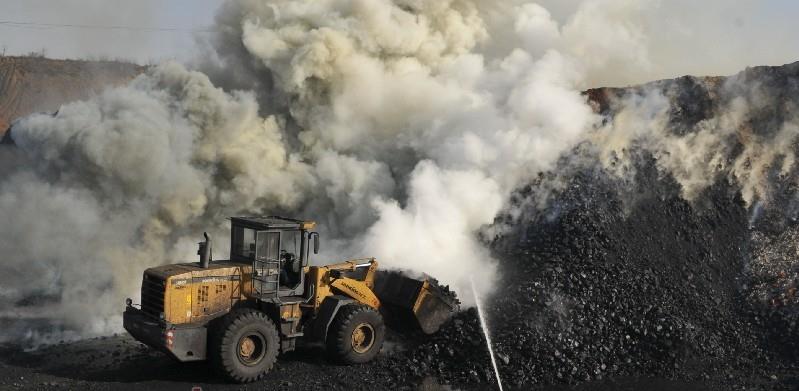
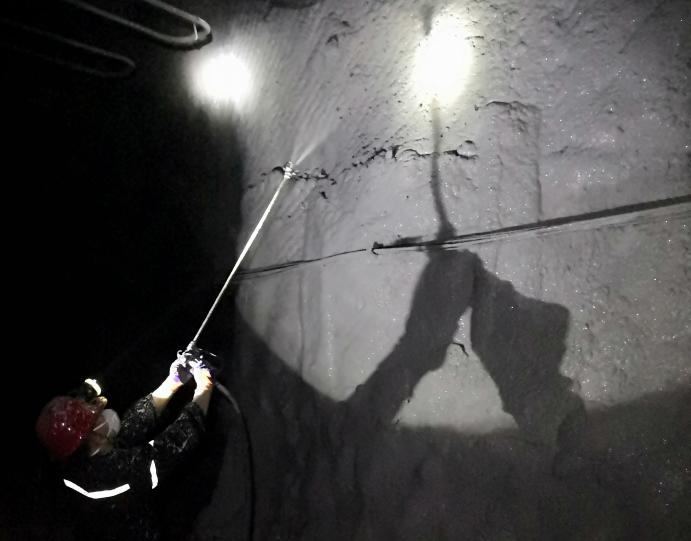
Comprehensive Control of Coal Spontaneous Combustion Disasters

Eliminating coal spontaneous combustion disasters and safeguarding the safety of coal mine production.

Slider Image
Slider Image
Slider Image
Slider Image

Our Mission

Leverage advanced technologies to deliver full-cycle mine disaster warning and control solutions globally, build a safe, intelligent and green mining environment, protect miners and production safety, and empower the sustainable development of the global coal industry.

10+
Countries Covered

Guard the safe production of coal mines worldwide

Card Icons

Tech-driven

Address core pain points of mine disaster prevention with intelligent early warning, equipment and control technologies.

Card Icons

Global coverage

Provide customized full-scenario solutions for coal spontaneous combustion, dust, ventilation and other mine disasters.

Card Icons

Fundamental goal

Prevent mine disasters at the source, safeguard miners' lives and health, and ensure stable mining production.

Satisfactions
99% Satisfied Rate
Highly Rated Icons
Highly Rated Icons

About Us

Your Trusted Partner in Mine Safety

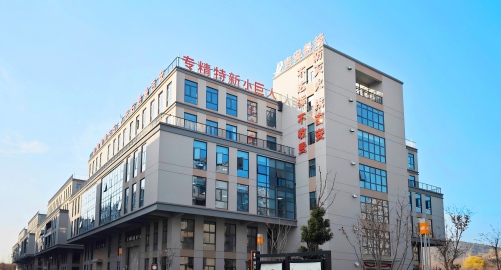
Jiangsu Ji’an Mining Technology Joint Stock Co.,Ltd. is a national-level high-tech enterprise and a key national "Little Giant" firm specializing in coal spontaneous combustion prevention and control. Committed to technological innovation and services, we have invested in three subsidiaries to form a synergistic development pattern. We have built five core systems: intelligent disaster early warning, prevention materials, intelligent equipment, inspection and testing, and technical services. We provide mines with full-process solutions covering monitoring and early warning, safety diagnosis and disaster control.

Highly Rated Icons

Expert Team

We have a high-level professional team of industry experts specializing in mine safety.

Satisfaction Icons

R&D Achievements

We own numerous core patents and boast many internationally advanced technologies.

  • National high-tech & Specialized little giant enterprise in coal fire prevention.
  • Integrated mine safety solution provider with complete business system.
  • Strong R&D with core patents, international tech and national awards.

200

+
Intellectual Property

1000

+
Clients Served

200

+
Staff

10

%+
R&D Investment

Our Services

Customized Solutions for Global Coal Mining

01

Underground Coal Mine Fire Control

The core of underground coal mine fire control lies in the prevention and control of coal spontaneous combustion. It addresses residual coal oxidation, air leakage, oxygen supply, and heat accumulation across various mining scenarios by establishing an integrated technical system featuring advanced prevention, precise sealing, efficient fire extinguishing, and long-term combustion inhibition. This system enables early identification and control of spontaneous combustion hazards, prevents major fire accidents, and ensures safe mine operation. 1. Key Scenarios and Governance Logic of Coal Spontaneous Combustion Underground coal mine fires mostly occur in hidden areas such as goafs, broken coal pillars, high-level caving zones, abandoned roadways, and corner areas due to continuous oxidation and heat storage. Given the differences in air leakage and residual coal distribution in each area, targeted technologies are required: Goaf Oxidation Zone: Stable air leakage and wide residual coal distribution easily meet spontaneous combustion conditions, requiring oxidation isolation and oxygen cutoff. Hidden Fire Source in Goaf: Concentrated residual coal, continuous air leakage, and concealed fire sources easily cause temperature rise and ignition, requiring cooling, fire extinguishing, and long-term inhibition. Corner Areas: Large air leakage, accumulated residual coal, and poor heat dissipation require foam filling, air leakage sealing, and residual coal encapsulation. Spontaneous & Weathered Roadways: Broken coal mass and air leakage lead to long-term oxidation, requiring spray sealing and oxygen isolation. Sealed Walls: Prone to air leakage and incomplete roof contact, requiring filling and sealing to cut off oxygen supply. High-level Caving Zones: Accumulated residual coal and poor ventilation cause heat buildup, requiring full-area foam filling and oxygen isolation. Abandoned Roadways: Large amounts of residual coal and continuous air leakage form hidden fire points, requiring full-section filling and complete oxygen cutoff. Broken Coal Pillars: Developed fractures and multiple air leakage paths require coal pillar reinforcement and fracture sealing. Broken Roofs: Severe air leakage and accumulated floating coal require advanced reinforcement, fracture sealing, and air leakage reduction. 2. Classification and Characteristics of Spontaneous Combustion Control Materials 1) Filling & Sealing Materials Purite Fire Extinguishing Material (JTF-Ⅱ): Low-temperature chemical foaming, expansion ratio > 10×, direct contact with coal allowed. Purite Fire Extinguishing Material (JTF-Ⅳ): For air leakage and fracture sealing in steeply dipping working faces; water-solid ratio adjustable, water retention up to 30×. Gainike Inorganic Self-Foaming Filling Material (JWT-Ⅲ): Inorganic self-foaming filling material, room-temperature curing, low-cost, odorless, safe. Gainike Inorganic Foam Filling Material (JWT-Ⅰ/Ⅰ): Single-component inorganic foam, lightweight, eco-friendly, high-sealing. Plastic Sealing Material (FSD-Ⅰ): Paste-type, non-curing, deformable, dynamic pressure resistant. Purite Fire Prevention And Extinguishing Material (JTF-Ⅴ): Inorganic material, room-temperature reaction, permanently paste-like for corner and broken zones. 2) Fire Extinguishing & Cooling Materials Purite Special Mine Fire Extinguishing Liquid (JTF-Ⅰ): Foam first for diffusion, then gel for cooling; expansion ratio > 20×, high water content and retention. Composite Gel (High Water-Retention Hydrogel) (MAG-Ⅱ): Quick gel formation from water, maximum water retention up to 200×. 3) Special Sealed Wall Filling Gainike Inorganic High-Efficiency Filling Material For Closed Wall (JCT-Ⅰ): Replaces loess filling, 10× construction efficiency, pressure filling, 100% roof contact. 4) Grouting Enhancement Materials Eakt Slurry Colloidal Foam (FJP-Ⅱ): Chemically foamed yellow mud for hidden fire source treatment. Eakt Mud Inhibiting Foam (FJP-Ⅰ): Enables “water flowing upward” and three-dimensional diffusion. Composite Gel (High Water-Retention Hydrogel) (MAG-Ⅰ): Thickening agent for yellow mud/fly ash slurry to prevent channeling. 5) Spray & Leakage Sealing Materials Gainike Inorganic Foam Spraying Material (JWT-Ⅰ/P): Seals roadway surface fractures and controls gas emission. Gainike Non-Rebound Rapid-Hardening Spraying Material (JPW-Ⅰ): Replaces cement mortar, low dust, fast curing, eco-friendly. Gainike Plastic Spraying Sealing Material (JPF-Ⅲ): High adhesion, elongation >100%, anti-cracking under dynamic pressure. Gainike Roadway Surface Spraying Sealing Material (JPF-Ⅰ): Strong adhesion, anti-weathering, anti-seepage. 6) Coal-Rock Mass Reinforcement Materials Youkani Low-Temperature Coal And Rock Mass Reinforcement Material (KDJ-Ⅱ): Low-temp reaction and curing, elastic and deformation-resistant. Lianshi Inorganic Coal And Rock Mass Reinforcement Material (KWJ-Ⅰ): Fast setting, high strength, cost-effective. Coal spontaneous combustion control is a systematic project critical to safe mining operations throughout the mine life cycle, focusing on scenario-based precise governance and full-process technical collaboration. Based on independently developed fire prevention and extinguishing materials, we have built a comprehensive solution integrating early warning and prevention, precise sealing and oxygen isolation, efficient fire extinguishing and cooling, and long-term combustion inhibition for key risk areas such as goafs, corners, and roadways, achieving a shift from passive emergency response to active intelligent prevention. This system effectively controls spontaneous combustion hazards, prevents major fires, and protects personnel safety and production stability. With eco-friendly, efficient, economical, and long-lasting advantages, it provides reliable global solutions for coal mines. Moving forward, we will continue to innovate technologies and materials, integrate intelligent and digital applications, and advance underground coal mine fire control toward precision, efficiency, greenness, and intelligence, building a solid safety barrier for global energy security and sustainable mining development.
Read More
02

Coal Mine Intelligent Fire Monitoring System

This system integrates the early warning and prevention needs for both internal and external cause fires in mines. Through multi-source data fusion, it achieves integrated perception and panoramic situation display. Relying on a big data platform, it conducts cross-validation of multi-source information, accurate risk identification and intelligent deduction, and supports hierarchical and classified early warning. Based on an expert knowledge base, it automatically generates prevention and control strategies, realizing the full-process closed-loop management and control of "early detection, accurate judgment, rapid response, and effective disposal". It builds a proactive and integrated mine fire prevention and control system that integrates perception, analysis, early warning and decision-making, comprehensively improving the mine's fire prevention and control as well as emergency response capabilities. 1. Mine Spontaneous Combustion Fire Monitoring and Intelligent Early Warning System Through laser spectroscopy and cyclic sampling technology, the system accurately analyzes the concentrations of more than ten kinds of coal spontaneous combustion indicator gases. It adopts optical fiber temperature measurement technology to realize continuous temperature monitoring along the entire roadway, and deploys multi-parameter sensors in the return air corner and goaf, thus establishing a full-range fire monitoring network system in the working face. Data is uploaded in real-time for fusion analysis. Based on the coal spontaneous combustion early warning index model, it realizes trend prediction, hierarchical early warning and linkage disposal. Combined with the advancement of the mining face, it dynamically displays the evolution process of the "three zones" in the goaf, providing decision support for scientific prevention and control. 2. Mine-Used Confined Space Multi-Parameter Monitoring System Integrating automatic sampling, multi-parameter detection, data storage and real-time transmission, the system uses an armored temperature measuring probe to go deep into the interior of the closed wall to continuously monitor air temperature and water temperature. It also uses a micro air pump built into the host to collect gas samples at regular intervals, and analyzes the concentrations of spontaneous combustion indicator gases (CO, CO₂, CH₄, O₂, C₂H₄, C₂H₂, etc.) in real time. Meanwhile, the system integrates differential pressure, absolute pressure and wind speed sensors to monitor the differential pressure inside and outside the closed wall and the roadway wind speed in real time, so as to accurately judge the air leakage status. It not only provides data support for fire prediction, but also offers key basis for the optimization of mine ventilation systems. 3. Regional Fire Monitoring, Early Warning and Extinguishing Control System This system integrates automatic alarm and intelligent fire suppression. It consists of fire monitoring sensors, integrated optical fiber vibration and temperature detection devices, and various fire suppression devices. Adopting a "point-line combination" architecture, it realizes key monitoring of critical areas, as well as full-line temperature and abnormal vibration monitoring. Data is uploaded to the central platform in real time for fusion analysis and alarm management. According to the type and location of the fire, it intelligently links with sprinkler, dry powder or gas fire suppression devices to quickly suppress the fire and reduce secondary risks, forming a closed-loop prevention and control system covering perception, analysis, response and linkage. 4. Intelligent Fire Monitoring System for Coal Bunker It realizes real-time collection, analysis and early warning of indicator gas concentration and temperature data in the coal bunker. It can conduct data communication with the nitrogen injection system to achieve linked control of coal bunker fire monitoring and inerting treatment. The system covers all mine scenarios such as coal bunkers, roadways, goafs and enclosed spaces. It integrates three core capabilities: fire early warning, intelligent analysis and linkage disposal, realizing the transformation from passive response to active prevention and control. It comprehensively improves the efficiency of mine fire prevention and control and emergency response levels, ensuring the safety of mine production and personnel.
Read More
03

Mine Intelligent Ventilation System

The mine intelligent ventilation system is a comprehensive mine ventilation management platform that integrates modern sensor technology, the Internet of Things (IoT), big data analysis, artificial intelligence (AI), and automatic control technology.Through real-time perception, intelligent decision-making, automatic regulation, and remote monitoring of downhole ventilation environment parameters, it realizes safe, efficient, energy-saving, and economical operation of the mine ventilation system. Its core concept is to transform from the traditional modes of "determining production based on fixed air volume" (arranging production according to fixed air volume) and "manual experience-based regulation" to the modes of "on-demand ventilation" and "intelligent dynamic regulation", enabling the ventilation system to proactively adapt to the complex and changing downhole production environment and disaster risks. The intelligent ventilation system is mainly composed of three parts: the intelligent ventilation integrated management and control platform, online monitoring of mine ventilation status, and intelligent regulation of mine air flow. 1. System Functions 1.1 Ventilation Parameter Monitoring Integrates multiple types of sensors (wind speed, temperature and humidity, gas concentration, etc.) to collect real-time ventilation data such as roadway static pressure and air volume. 1.2 Equipment and Facility Monitoring Real-time perceives the status of equipment like remotely controlled air doors and variable-frequency fans. It is matched with a facility monitoring interface diagram to visually display equipment status. 1.3 Real-Time Calculation of Air Network Based on real-time monitoring data, the air volume is calculated through programs to dynamically grasp the air volume distribution of roadways in the entire mine. 1.4 Fault Diagnosis and Early Warning Based on neural networks and big data analysis, it intelligently identifies air flow hidden dangers (such as excessive wind speed, circular air flow) and facility faults, and issues early warnings. 1.5 Disaster Simulation and Analysis Evaluates the disaster impact range and air flow disorder risks through the air network model to assist in formulating emergency air control plans; matches with disaster simulation effect diagrams to present visual deduction of scenarios. 1.6 Disaster Avoidance Route Generation Combines real-time air flow dynamics and disaster information to intelligently plan the shortest safe evacuation path, avoid areas where toxic and harmful gases spread, and improve the efficiency of personnel escape. 1.7 Remote Air Flow Regulation According to the air network calculation and decision-making, it remotely controls air doors, air windows, and main/local ventilators to achieve precise air volume regulation. 1.8 Ventilation Data Management Integrates and stores data from the entire process of monitoring, calculation, and regulation. It supports historical trend query and multi-dimensional analysis, providing data support for ventilation system optimization. 2. System Features 2.1 Reduce Manual Work, Realize Unattended Operation It realizes 24/7 uninterrupted automatic monitoring of the status of all ventilation facilities (including main fans, local fans, air doors, air windows) as well as mine air volume, air pressure, temperature, humidity and gas. According to system instructions, regulating facilities such as air doors and air windows can automatically perform opening/closing or adjustment actions, eliminating the need for frequent underground manual operations and reducing work intensity and labor costs. 2.2 On-Demand Air Supply, Precise Distribution Through air network calculation, it dynamically calculates the required air volume for each air-using location in the ventilation system. By remotely adjusting the opening of air windows and the operating power of main fans and local fans, the optimal distribution of air volume is achieved, avoiding energy waste caused by "using a large horse to pull a small cart" (i.e., excessive energy consumption for low-demand operations). 2.3 Customizable Ventilation Reports and Trend Analysis The system can automatically generate standardized ventilation reports on daily, weekly, monthly, annual and other cycles. The reports cover all key indicators such as air volume, air pressure, gas concentration and equipment operation status, and the report format and content can also be customized as needed. All data is stored in the database, allowing for real-time query of historical records and multi-dimensional comparative analysis, which enables a clear view of the change trend of the ventilation system.
Read More
04

Coal Mine Dust Suppression System

The coal mine dust suppression system consists of four parts: dust suppression for fully mechanized mining faces, dust suppression for driving faces, dust suppression for belt conveyor transfer points, and dust suppression for roadways. It is managed by one main control box (for data upload) and controlled by multiple sub-control boxes. The ground centralized control software displays the working status and relevant data in real time, and remotely sets the working mode and the start/stop of dust suppression equipment according to the mine working environment. Comprehensive Perception And Intelligent Linkage Control Real-time data collection through multiple types of sensors, and intelligent linkage with production equipment to achieve precise dust suppression. Efficient And Precise Multiple Dust Suppression Technologies Adopting advanced technologies such as foam dust suppression and dry mist dust suppression to efficiently capture dust and significantly improve dust suppression efficiency. Remote Centralized And Local Autonomous Control Supports ground remote centralized control and local operation of sub-control boxes, combined with real-time data display to achieve flexible and efficient management. 1. Fully Mechanized Driving Face Dust Suppression System The fully mechanized driving face dust suppression system is mainly composed of mine-used foam dust suppression devices, air-water jet dust suppression devices, belt conveyor transfer dust suppression devices, and roadway dust removal devices. It can be used in conjunction with multiple types and models of equipment, such as roadheaders and excavation-anchoring integrated machines. During the driving operation, the start-stop sensor installed on the equipment body sends a signal to the sub-control box, which automatically controls the start and stop of the air-water jet dust suppression device. It also realizes linkage operation with the transfer point dust suppression system and the roadway dust removal system, thereby efficiently controlling the high-concentration dust generated during excavation and anchoring operations. 2. Fully Mechanized Mining Face Dust Suppression System The main coal-producing processes of the fully mechanized mining face include shearer coal cutting, support movement, transportation and transfer. The dust suppression of the fully mechanized mining face consists of the shearer spray assembly, hydraulic support spray assembly, transfer point spray assembly, return airway dust suppression assembly, and mine-used liquid adding device. 3. Dust Suppression System For Belt Conveyor Transfer When coal flow passes through the coal conveying belt, the touch sensor detects the coal flow rate and sends a signal to the sub-control box, which controls the electric valve to turn on the spray device and continuously sprays the transfer point for dust suppression. The belt conveyor transfer dust suppression can be used as an independent system or connected to the centralized control software platform. The ground software can monitor the spray status of the dust suppression system in real time, and the start/stop of the spray in the dust suppression system can also be remotely controlled from the ground upper computer to achieve remote monitoring. 4. Roadway Dust Suppression System The dust concentration in the roadway air flow is detected by a dust concentration sensor. When the measured value exceeds the specified value, a signal is sent to the sub-control box to control the electric valve and turn on the spray device, realizing the automatic spray function when the dust concentration exceeds the limit. When there are personnel walking in the roadway, the infrared pyroelectric sensor can detect and send a signal to control the start and stop of the spray device during the personnel's passage. The roadway dust suppression can be used as an independent system or connected to the centralized control software platform, enabling on-site display of dust concentration, online monitoring and real-time data upload. The ground software can monitor the dust concentration and the spray status of the dust suppression system in real time, and the start/stop of the spray in the dust suppression system can also be remotely controlled from the ground upper computer, realizing the function of remote centralized control.
Read More
05

Industrial Dust Comprehensive Control

Industrial dust is a core challenge that restricts production safety, degrades environmental quality, and endangers employee health. Its management must adhere to the core principle of "dust control, suppression, and collection". By integrating process characteristics and on-site scenarios, we build a comprehensive, multi-technology collaborative governance system. This article systematically outlines a complete solution for industrial dust control from three dimensions: governance philosophy, core technologies, and scenario-based applications. I. Governance Philosophy: From Source Control to Systematic Elimination Comprehensive industrial dust control follows a progressive logic: "restriction & guidance → on-site suppression → thorough elimination". Its core is to achieve full-chain management of "source reduction, process suppression, and end-point collection" through technological integration, which is divided into three key stages: Source Reduction: Minimize dust generation at the source through process optimization, airtight encapsulation, and other measures to reduce subsequent governance costs and pressures. Process Dust Suppression: Utilize technologies such as dust suppressants, atomization, and foam to block dust diffusion during its generation, preventing it from escaping into the workplace. End-Point Dust Collection: Capture and purify escaped dust using high-efficiency dust removal equipment to ensure compliance with emission standards. This full-chain management model not only effectively reduces investment and operational costs but also achieves efficient, energy-saving, and eco-friendly dust control, creating a safe, clean working environment for industrial production. II. Core Technology System: Multi-Dimensional Collaborative Governance A. Dust Suppression Technologies: Blocking Dust Diffusion at the Source 1. SRUIFF Dust Suppressant As an advanced eco-friendly dust suppressant, it quickly modifies the surface properties of dust and water, accelerating dust wetting for efficient suppression. Non-toxic, non-corrosive, and harmless to the environment and organisms, it requires no complex equipment; simple spraying delivers long-lasting dust control. It is ideal for open-air and semi-open-air dust-generating scenarios, including open-pit mines, road dust, and stockyards. 2. Micro-Atomization Dust Suppression System High-pressure equipment atomizes water into fine droplets (with particle sizes matching dust particles). These droplets collide with dust, agglomerate, and settle naturally to suppress dust. Suitable for fixed dust-generating points (e.g., material transfer, crushing, screening), the system automatically adjusts spray parameters based on dust output for precise control. With minimal water consumption, it prevents material moisture absorption, making it perfect for moisture-sensitive material processing. 3. Foam Dust Suppression System Using foam as the dust-reducing medium, its large contact area and strong adhesion form a dense foam layer at dust sources, blocking dust at feeding points. The foam remains effective throughout material transportation, suppressing dust continuously. It is suitable for high-dust links such as material transfer, crushing, and screening in conveying systems. B. Dust Collection Technologies: Efficient End-Point Dust Purification 1. Modular Pulse Bag Dust Collector As the most widely used dust collection equipment, it features a compact design that adapts flexibly to various workshop layouts. Membrane-coated filter bags ensure excellent sealing and high dust collection efficiency, meeting the latest national emission standards. Low compressed air consumption significantly reduces energy use, making it versatile for dust collection and purification across industries. 2. High-Pressure Atomization Dust Reduction System Special nozzles atomize high-pressure water into ultra-fine droplets, which fully contact and combine with airborne dust before settling. The system flexibly adjusts spray pressure, angle, and flow to capture dust of all particle sizes. It is suitable for low-moisture-requirement scenarios, such as workshop coking and automobile/train loading. 3. Wet Negative Pressure Dust Collector Integrating wet dust collection and negative pressure technology, it draws dust-laden airflow into the equipment via negative pressure, then purifies dust through water curtain washing and gas-liquid separation. Secondary dust capture ensures emission compliance, making it ideal for high-concentration, centralized dust scenarios (e.g., screening and crushing workshops). 4. Unpowered/Micro-Powered Dust Removal Device Based on fluid mechanics, it uses material flow drop to generate natural micro-negative pressure, guiding dust into a closed channel for collection—no additional power required. With ultra-low energy consumption and simple maintenance, it is a green, energy-saving solution for moderate-dust scenarios such as belt transfer and material falling. III. Scenario-Based Applications: Targeted Solutions to Industry Pain Points Customized dust control solutions are tailored to different production links and process characteristics to ensure optimal performance, as detailed below: Tail Section Dust Control: Prioritize unpowered dust removal devices, then enhance effectiveness with micro-atomization, wet dust collectors, or foam suppression to fully block dust leakage. Coal Feeder Dust Control: Use steel sealing for the coal feeder’s upper part and chutes, with soft sealing for gaps, to physically eliminate dust leakage and achieve zero dust during feeding. Mobile Belt Conveyor & Impeller Feeder Dust Control: Install atomizing nozzles on the impeller feeder’s upper part and chutes, paired with mobile water-gas pipelines that move with the equipment to capture dust dynamically, ensuring no blind spots. Classifying Screen Dust Control: Fully seal the screen with a rigid cover, with soft sealing for gaps; optionally add atomization or wet negative pressure dust collectors for enhanced performance. High-Drop & Strong-Blow Discharger Tail Dust Control: Combine wet negative pressure and bag dust collectors to guide dust-laden airflow via negative pressure and high-efficiency filtration, solving dust diffusion in high-drop, strong-wind scenarios. Scraper Conveyor Dust Control: Install expanded cover plates with closed observation windows to improve airtightness while ensuring visibility; add atomization suppression to reduce transport dust. Desizing Screen Dust Control: Use a lightweight, visible closed cover to balance visibility, maintenance, and airtightness; pair with wet negative pressure dust collectors for efficient screening dust purification. Head Section Dust Control: Add a head cover, replace with closed observation windows, and install work surface scrapers to prevent material spillage, avoiding dust accumulation and secondary dust. Plow Unloader Dust Control: Add a cover with dust suppression curtains at the inlet to block dust escape; pair with atomization suppression to adapt to plow operation dust characteristics. Automobile & Train Loading Dust Control: Use high-pressure or micro-atomization suppression for rapid dust control via droplet-dust collision; pair with SRUIFF series dust suppressants for long-lasting effectiveness. Automobile & Train Unloading Dust Control: Install micro-atomization systems in large open unloading areas to fill the space with mist; use SRUIFF series dust suppressants to accelerate dust wetting and settlement, improving efficiency. Comprehensive industrial dust control is not the isolated use of a single technology, but the systematic integration and collaboration of dust suppression and dust collection equipment. Through full-process management—"source suppression, process control, and end-point collection"—it effectively addresses dust leakage, environmental pollution, and employee health risks, reduces enterprise governance costs, and improves production safety. Ultimately, it achieves "efficient, energy-saving, and green" industrial dust control, providing a solid foundation for sustainable industrial development.
Read More
06

Integrated Solutions for Coal Mining & Mine Safety

Focusing on the core pain points and development needs of the coal mining industry, we focus on details and empower precisely, professionally providing comprehensive, efficient and customized overall solutions for coal mining technologies and safety control. With safety as the bottom line, efficiency as the core and green development as the orientation, we rely on strong technical strength and rich practical experience to build full-process, integrated core solutions for coal mining and safety control, helping customers achieve safe, efficient, green and low-carbon mining, and safeguarding the high-quality development of the coal mining industry with professionalism and responsibility. 1 Coal Mining Technologies 1.1 Blasting Mining 1880s – Early 1960s Blasting mining is a relatively backward coal mining technology, formally known as blasting coal mining technology. Its core process is: coal cutting by blasting, followed mainly by manual coal loading, coal conveying with conveyors, and roof support using single hydraulic props (or metal friction props). This process is essentially labor-intensive and highly dependent on manual work, often described as “open-flame blasting for coal cutting, manual coal loading, and human/animal-powered transportation”. Due to technical limitations, blasting mining has three prominent problems: first, serious resource waste, with a working face recovery rate usually only 30%–40%; second, extremely high labor intensity and harsh working environment; third, high safety risks with frequent roof accidents and gas accidents. Overall, this technology is inefficient and provides poor safety assurance. 1.2 Conventional Mechanized Mining 1960s – 1970s Conventional mechanized mining, or conventional mining for short, refers to a coal mining technology that uses machinery for coal cutting and loading, conveyors for coal haulage, and single hydraulic props (or metal friction props) for roof support. With the application of shearers, coal mining processes entered the mechanization stage. A typical supporting system was formed, featuring single-drum shearers for coal cutting, flexible scraper conveyors for coal haulage, and single props for roof support, marking the basic formation of conventional mechanized mining. Compared with blasting mining, conventional mining realized mechanized coal cutting and loading, but the support operation still required manual work, belonging to partially mechanized mining with limited mechanization. 1.3 Fully Mechanized Mining Early 2000s – 2010 Fully mechanized mining, or fully mechanized mining for short, refers to a coal mining technology that uses machinery for coal cutting, loading and haulage, and self-advancing hydraulic supports for automatic roof support. Its technical core lies in the “three-machine matching”: coordinated operation of the shearer, scraper conveyor and hydraulic support. Compared with conventional mining, fully mechanized mining realized automation of the support process — workers operate under the protection of “iron pillars” formed by hydraulic supports, greatly improving safety. With the application of electro-hydraulic control technology, fully mechanized mining achieved full mechanization and automatic linkage of the whole mining process, representing a modern, high-yield, high-efficiency, safe and reliable direction of coal mining. 1.4 Intelligent Mining 2010 – Present Intelligent mining is a new mining model with an intelligent dispatch center as the core, integrating coordinated intelligence of the whole system including mining and tunneling. Its technical closed-loop covers four levels: Intelligent perception: real-time sensing of geological conditions, equipment status and environmental data through sensors and 5G communication; Intelligent decision-making: optimization of mining plans and risk prediction through AI algorithms and big data analysis; Intelligent control: unmanned operation of the working face based on electro-hydraulic control systems and automatic cutting technology; Intelligent operation and maintenance: full-life-cycle equipment maintenance through fault prediction and health management. Driven by 5G+AI, combined with transparent geological precise modeling and the green low-carbon concept, it finally achieves fewer-person/unmanned underground operation and intrinsic mine safety. 2 Tunneling Technologies 2.1 Stage 1: Manual and Early Blasting Stage (Before 1950s) Early tunneling mainly relied on manual pick excavation. A small amount of rock was treated by chiseling and fuse blasting. In the early days of the People’s Republic of China, electric drills and pneumatic drills were widely used, entering semi-coal-rock and rock roadway tunneling. Blasting technology was gradually improved, such as the adoption of pot-hole cutting. Loading completely depended on manual shoveling, with extremely high labor intensity. 2.2 Stage 2: Mechanized Blasting Stage (1950s – 1970s) This stage took the drill-blasting method as the core, with continuous innovation in tunneling technology. Since 1953, instantaneous detonators and blasters were widely used, and cutting methods such as wedge cutting and parallel kerf cutting as well as multi-driller drilling were promoted. In the 1970s, millisecond blasting was successfully tested, realizing one-time full-section blasting and significantly improving safety and efficiency. Mechanized loading began to emerge. Soviet-style coal loaders and rock loaders were introduced in 1951, and scraper rock loaders became mainstream after 1970, greatly improving the mechanization level of loading. In terms of support, timber supports and cement supports were gradually replaced by metal supports and bolt support. Bolt-shotcrete technology was trial-used in 1968. 2.3 Stage 3: Initial Stage of Comprehensive Mechanization (Late 1970s – 1990s) To match fully mechanized coal mining, coal roadway roadheaders such as Austria’s AM‑50 and products from Japan were introduced from 1979, replacing drill-blasting with milling technology and launching comprehensive mechanized roadway tunneling. Meanwhile, mechanized operation lines with scraper rock loaders were widely established, forming various mechanized operation modes for level roadways, inclined shafts and other roadways. By 1985, the mechanization rate of tunneling and loading increased to 64%, but the drill-blasting method remained the basic technology. 2.4 Stage 4: Rapid Tunneling and Complete Equipment Stage (Early 2000s – 2020s) To address the imbalance between mining and tunneling, breakthroughs were made in rapid tunneling technology. Four major types of rapid tunneling systems were formed, led by continuous miners, bolter-miners, roadheaders and full-face tunnel boring machines for coal mines. Technological innovations included dual-roadway tunneling, simultaneous digging and bolting, and spatio-temporal multi-dimensional synchronous rapid tunneling, breaking the traditional “dig first, support later” mode. Bolt support equipment evolved from single drills to one-key operation process drills and drill clusters, greatly improving operation safety. The average roadway forming speed of full-face rock tunnel boring machines exceeded 400 meters per month, and mechanical rock breaking technology achieved breakthrough progress. 2.5 Stage 5: Intelligent Tunneling Stage (2020s – Present) At present, the industry is moving toward fewer-person and unmanned intelligent tunneling. Core technologies include precise equipment positioning (vision + inertial navigation), directional tunneling, autonomous cutting, intelligent support, collaborative control of equipment groups, and digital twin-driven intelligent management systems. In 2025, the industry has realized routine unmanned intelligent cutting in deep-buried large-section coal roadways. Bolter-miners can operate autonomously throughout the process, with boundary cutting errors controlled within 3 cm. Intelligent bolting robots integrate cutting, loading, haulage and drilling-bolting to realize remote automatic cutting, with monthly advance increased by more than 20% compared with traditional technology. Driven by 5G+AI and combined with transparent geological precise modeling, coal mine tunneling is continuously evolving toward the goal of “intrinsic safety, safety with fewer people”. 3 Fire Prevention and Control A full-chain technical system of “Theoretical Analysis – Dynamic Monitoring – Engineering Prevention and Control – Cutting-edge Innovation” has been established, supported by a professional engineering delivery team to ensure the efficient implementation of technical solutions from design to construction, building a core technical barrier for mine disaster control. With mature technology and execution capabilities, more than ten major fire prevention and control projects have been successfully completed in recent years, accumulating rich practical experience. 4 Dust Control A full-process, intelligent comprehensive mine dust control technology system has been built. Focusing on key production links such as tunneling, mining and transportation, we devote ourselves to the R&D and engineering application of cutting-edge technologies including foam dust removal, intelligent dust control and high-efficiency dust suppression, providing systematic solutions for mine dust prevention and control. 5 Mine Ventilation A full-chain technical service system of “Precise Detection – Scientific Analysis – Intelligent Optimization” has been established. Core businesses cover key fields such as ventilation resistance measurement, full-performance testing of main fans, and R&D of intelligent ventilation technology. With the professional advantage of customized solutions, a number of key projects have been efficiently completed in recent years, building a solid and reliable technical barrier for mine ventilation safety. 6 Gas Control A full-chain technical system for coal seam gas covering “Basic Parameters – Occurrence Regularity – Extraction Efficiency – Disaster Prevention and Control” has been established. Businesses cover key links such as parameter measurement, extraction evaluation, grade identification and technology R&D. With a systematic technical layout, a number of landmark achievements have been made, building a solid technical fortress for mine gas disaster prevention and control. More than ten key gas control projects have been efficiently completed in recent years. 7 Coal Storage and Transportation Fire Prevention Spontaneous coal combustion is a typical disaster in coal storage and transportation, caused by coal oxidation under certain conditions. It easily leads to coal resource loss, coal quality degradation, and safety and environmental protection accidents. As a supplier of overall solutions for spontaneous combustion prevention in the whole life cycle of coal, we build a full-chain prevention and control technology system with “active early warning + precise prevention and control”. Through ad-hoc network monitoring systems, 24-hour real-time perception, early detection and early positioning are realized. Relying on coal-oxygen inhibitors and sealing materials, a dual prevention mechanism of internal chemical inhibition and surface physical isolation is constructed. Integrated with coal quality management requirements, customized solutions are formed to realize the integration of coal storage and transportation fire prevention and coal quality stability maintenance, helping customers build a safe, green and economical coal storage and transportation system and truly realize “stable storage, reliable retention and effective management” of coal. 8 Ground Pressure Control Focusing on complex geological working conditions in coal mines, we devote ourselves to three core directions: ground pressure evolution regularity, monitoring and early warning, and coordinated prevention and control, solving ground pressure control problems in complex scenarios such as extra-thick coal seams, gob-side entry retaining, deep mining and fractured surrounding rock. Core research includes in-situ stress measurement and analysis, dynamic evolution characteristics of ground pressure in the mining process, prevention of rock burst and roof disasters, and research on hydraulic roof cutting and pressure relief technology. Through the combination of on-site monitoring, numerical simulation and theoretical modeling, we accurately grasp the distribution regularity, evolution trend and failure mechanism of ground pressure under different geological conditions, providing a scientific basis for support scheme optimization. Through the research on ground pressure evolution regularity, we optimize support parameters and adjust support technology to realize the coordinated adaptation of ground pressure prevention and control and mine support, effectively resolving ground pressure risks caused by high stress and strong deformation, and reducing the incidence of ground pressure disasters. 9 Intelligent Construction We focus on three core fields of mine intelligent ventilation, collaborative disaster prevention and control, and intelligent fire prevention and control, and devote ourselves to key technical directions such as intelligent ventilation system construction and optimization, precise air flow regulation, intelligent gas and dust control, and intelligent emergency control. Relying on a number of engineering practices, accurate early warning and efficient prevention and control of disasters have been realized, which not only promotes the dual improvement of mine system reliability and operation safety, but also leads the transformation and upgrading of mine safety management toward intelligence and refinement. 10 Mine Support Focusing on the core goals of surrounding rock stability and risk prevention and control in complex coal mining scenarios, we devote ourselves to key technical fields such as support optimization of complex geological working faces, roadway surrounding rock control and collaborative protection. Based on the pain points of coal mine production sites, we break through support technical bottlenecks under various complex working conditions. We focus on solving support problems in complex working conditions such as extra-thick coal seams, gob-side entry retaining, deep mining and fractured surrounding rock, and form differentiated technical solutions for different geological conditions. In terms of coal pillar retention parameter optimization, through the combination of numerical simulation and field tests, we optimize coal pillar size and layout to realize the dual improvement of resource recovery and surrounding rock stability. In the field of small coal pillar roadway surrounding rock reinforcement, we develop highly adaptable reinforcement materials and construction technologies to effectively suppress roadway deformation and prevent surrounding rock collapse. In terms of complex geological support scheme adaptation, we formulate targeted support systems combined with geological survey data to improve mining efficiency and reduce support cost input, providing solid support technical support for safe, efficient and green coal mining. 11 Geological Water Hazard Control We focus on the prevention and control of geological water hazards such as goaf water accumulation, separated-bed water disaster, floor confined water and surface subsidence in coal mines, and deeply tackle core technologies including fine detection of goafs, precise plugging of water inrush channels, grouting reconstruction of aquifers, grouting reinforcement of floor aquicludes, and overburden isolation grouting for subsidence reduction. In the general survey of hidden disaster-causing factors, we focus on systematic research on geological problems such as geological heterogeneity, gas enrichment, water inrush hidden dangers and stress concentration. Relying on the real-time acquisition and fusion processing of “four-synchronization” (synchronization with drilling, tunneling, mining and caving) detection data, we significantly improve the real-time perception and interaction of geological information, effectively promote the reconstruction of dynamic geological models, and accelerate the construction of transparent geological platforms.
Read More

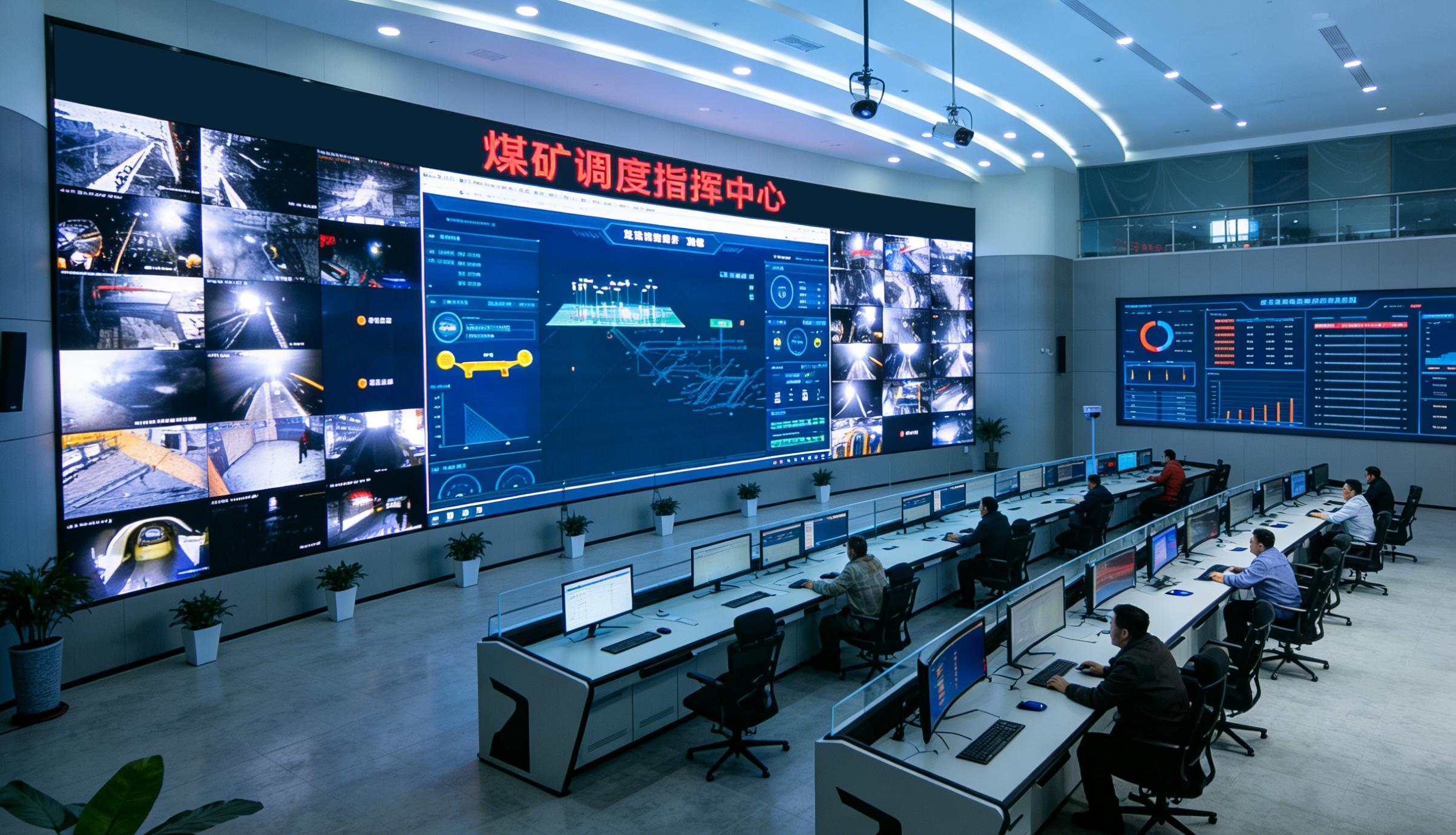
Our Cases

Proven Cases, Trusted Solutions for Global Coal Mines

Serving 1,000+ global coal enterprises, our projects cover core fields, delivering professional, customized solutions for safe and efficient mining.

18+ Years Of Experience

We Have Great Skilled And The Challenging Working Engineers.

Why Choose Us

Your Professional Partner for Safe & Intelligent Coal Mining

We are your trusted partner for safe, efficient and intelligent coal mining solutions, with unique advantages that stand out in the industry.

10%+ R&D investment, 200+ patents and a 200+ high-level professional team to drive technological innovation.
Serving 1,000+ coal enterprises worldwide, with mature solutions covering all core mine operation fields.
Tailor-made products and services to meet the diverse needs of global coal mining operations.
Focus on mine safety and efficiency, providing all-round support to ensure stable operation for our clients.

How To Works

Our Working Process

We follow a simple, efficient and professional process to provide you with customized solutions, ensuring smooth cooperation and ideal results.

01
Work Icons

Demand Consultation

Consult with your team to fully understand your mine’s needs, pain points and goals.

02
Work Icons

Scheme Design

Leverage our professional technologies and project experience to design a tailor-made solution for your mine.

03
Work Icons

Implementation & Support

Efficiently implement the solution and provide full-process technical support.

04
Work Icons

Follow-Up & Optimization

Continuously track and optimize the solution for long-term stable, efficient operation.

News

Latest News