The coal mine intelligent ventilation system is a comprehensive mine ventilation management platform that integrates modern sensor technology, the Internet of Things (IoT), big data analysis, artificial intelligence (AI), and automatic control technology.
System Overview
The coal mine intelligent ventilation system is a comprehensive mine ventilation management platform that integrates modern sensor technology, the Internet of Things (IoT), big data analysis, artificial intelligence (AI), and automatic control technology.
Through real-time perception, intelligent decision-making, automatic regulation, and remote monitoring of downhole ventilation environment parameters, it realizes safe, efficient, energy-saving, and economical operation of the mine ventilation system. Its core concept is to transform from the traditional modes of “determining production based on fixed air volume” (arranging production according to fixed air volume) and “manual experience-based regulation” to the modes of “on-demand ventilation” and “intelligent dynamic regulation”, enabling the ventilation system to proactively adapt to the complex and changing downhole production environment and disaster risks.
System Composition
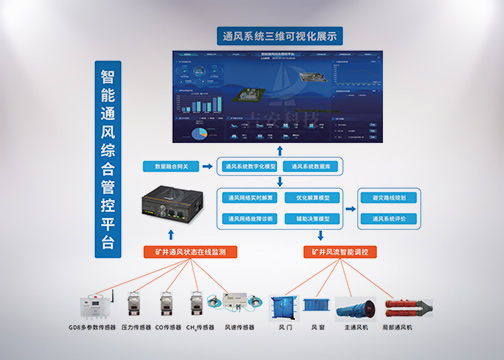
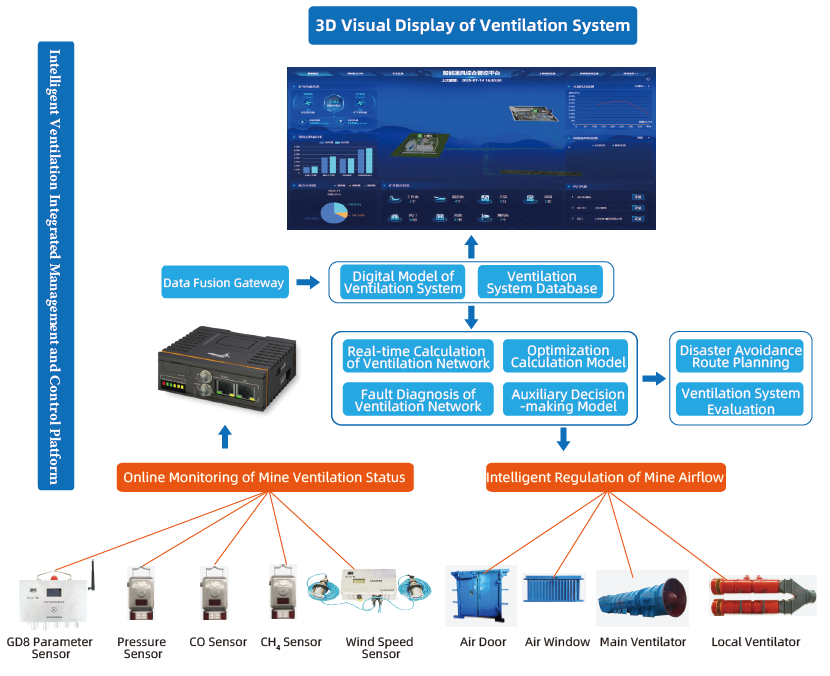
The intelligent ventilation system is mainly composed of three parts: the intelligent ventilation integrated management and control platform, online monitoring of mine ventilation status, and intelligent regulation of mine air flow.
System Functions
(1) Ventilation Parameter Monitoring
Integrates multiple types of sensors (wind speed, temperature and humidity, gas concentration, etc.) to collect real-time ventilation data such as roadway static pressure and air volume.
(2) Equipment and Facility Monitoring
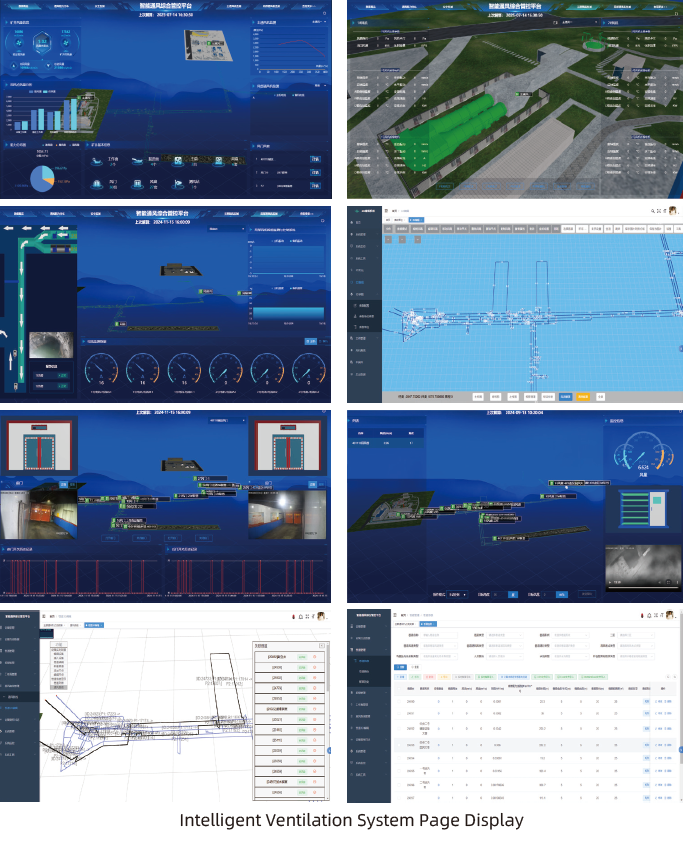
Real-time perceives the status of equipment like remotely controlled air doors and variable-frequency fans. It is matched with a facility monitoring interface diagram to visually display equipment status.
(3) Real-Time Calculation of Air Network
Based on real-time monitoring data, the air volume is calculated through programs to dynamically grasp the air volume distribution of roadways in the entire mine.
(4) Fault Diagnosis and Early Warning
Based on neural networks and big data analysis, it intelligently identifies air flow hidden dangers (such as excessive wind speed, circular air flow) and facility faults, and issues early warnings.
(5) Disaster Simulation and Analysis
Evaluates the disaster impact range and air flow disorder risks through the air network model to assist in formulating emergency air control plans; matches with disaster simulation effect diagrams to present visual deduction of scenarios.
(6) Disaster Avoidance Route Generation
Combines real-time air flow dynamics and disaster information to intelligently plan the shortest safe evacuation path, avoid areas where toxic and harmful gases spread, and improve the efficiency of personnel escape.
(7) Remote Air Flow Regulation
According to the air network calculation and decision-making, it remotely controls air doors, air windows, and main/local ventilators to achieve precise air volume regulation.
(8) Ventilation Data Management
Integrates and stores data from the entire process of monitoring, calculation, and regulation. It supports historical trend query and multi-dimensional analysis, providing data support for ventilation system optimization.
System Features
(1) Reduce Manual Work, Realize Unattended Operation
It realizes 24/7 uninterrupted automatic monitoring of the status of all ventilation facilities (including main fans, local fans, air doors, air windows) as well as mine air volume, air pressure, temperature, humidity and gas. According to system instructions, regulating facilities such as air doors and air windows can automatically perform opening/closing or adjustment actions, eliminating the need for frequent underground manual operations and reducing work intensity and labor costs.
(2) On-Demand Air Supply, Precise Distribution
Through air network calculation, it dynamically calculates the required air volume for each air-using location in the ventilation system. By remotely adjusting the opening of air windows and the operating power of main fans and local fans, the optimal distribution of air volume is achieved, avoiding energy waste caused by “using a large horse to pull a small cart” (i.e., excessive energy consumption for low-demand operations).
(3) Customizable Ventilation Reports and Trend Analysis
The system can automatically generate standardized ventilation reports on daily, weekly, monthly, annual and other cycles. The reports cover all key indicators such as air volume, air pressure, gas concentration and equipment operation status, and the report format and content can also be customized as needed. All data is stored in the database, allowing for real-time query of historical records and multi-dimensional comparative analysis, which enables a clear view of the change trend of the ventilation system.